Since the outbreak of the Middle East conflict in late February 2026, international oil prices have remained persistently high, with jet fuel prices soaring dramatically. As a critical link in the global logistics chain, the international air freight industry is facing unprecedented cost shocks. According to the latest data from the International Air Transport Association (IATA), the average jet fuel price in the Asia-Pacific region reached $204.95 per barrel during the week of March 14-20, up 16.6% from the previous week and a staggering 129.8% surge compared to the average price of the previous month. The speed and magnitude of jet fuel price increases far exceed those of Brent crude oil — which settled at $108.65 per barrel last Thursday, up about 50% since the conflict began. The aviation industry has become the "hardest hit" sector of this energy crisis.
This article analyzes the deep impact of rising fuel prices on the global air freight market from multiple dimensions — geopolitical background, fuel price trends, industry impact, and coping strategies — while providing practical logistics recommendations for our clients.
Following the U.S.-Israeli military strike against Iran in late February 2026, passage through the Strait of Hormuz — the world’s most important oil transport chokepoint — has been severely disrupted. Statistics show that the number of commercial vessels passing through the strait has dropped by 95% since the conflict began. The Strait of Hormuz handles approximately 20% of global oil trade, and its blockage has directly impacted global crude supply chains.
Jet fuel prices have doubled: According to commodity research firm General Index, jet fuel prices have risen from near $800 per ton in late February to $1,600 per ton — doubling in just one month, with a much steeper increase than other refined products like gasoline or marine fuel.
The sharper increase in jet fuel prices compared to benchmark crude oil is driven by two main factors:
l Very limited buffer stock: Jet fuel has stricter quality standards than other fuels and must be stored in dedicated tanks, making storage costly and short-term storage impossible. Therefore, its inventory buffer is far smaller than that of gasoline or diesel.
l Geographic mismatch between production and consumption: Crude oil producing countries are not necessarily refining countries. For example, South Korea, a major jet fuel exporter, relies heavily on imported crude oil, a large portion of which must pass through the Strait of Hormuz.
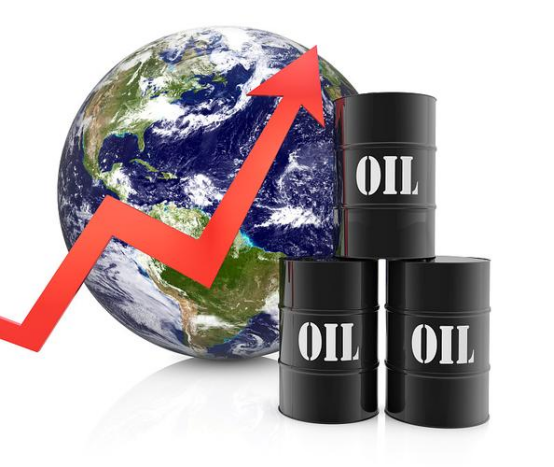
Recently, Yemen’s Houthi rebels have launched missiles at Israel, officially entering the U.S.-Israel-Iran conflict. Analysts warn that if the conflict continues, the Houthis may again block the Bab el-Mandeb Strait at the southern end of the Red Sea. With the Strait of Hormuz effectively closed, any further blockage of Red Sea shipping would send insurance premiums skyrocketing and drive oil prices even higher.
According to analysis, approximately 12-13% of global air freight capacity has been affected by reduced operations in the Gulf region and airspace closures. Flight cancellations and route diversions have created hard capacity constraints, amplifying tension in the freight market. Meanwhile, some Asian countries have begun restricting jet fuel exports — South Korea and Thailand have already imposed export limitations.
Soaring fuel prices are directly reflected in air freight rates:
l Global average air freight rates rose 10% week-over-week: World ACD data shows that for the week ending March 15, global average air freight rates climbed to $2.67 per kg, adding 10% on top of the previous week’s 8% increase.
l Baltic Air Freight Index rose 2.6% week-over-week: For the week ending March 16, global air freight rates continued to rise, driven mainly by capacity disruptions and fuel costs.
l Sharpest increases in the Middle East and South Asia: Spot rates in the Middle East and South Asia rose another 22% week-over-week to $4.37 per kg, up 58% year-on-year.
l India’s air freight market hit especially hard: India-to-Europe and India-to-U.S. air freight rates surged about 30% week-over-week.
Facing soaring fuel costs, multiple global airlines have already taken capacity reduction measures:
l South Korean carriers sharply raise fuel surcharges: Asiana Airlines’ international fuel surcharge for April is over 220% higher than the previous month, with Korean Air expected to implement a similar increase.
l South Korean LCCs reduce operations: Air Premia decided to further cut routes from May, while Jin Air suspended 45 round-trip flights on 8 routes from April 4 to April 30.
l Vietnam Airlines has suspended some domestic routes, and budget carrier VietJet has cut some international flights.
l Air New Zealand canceled 1,100 domestic flights, lasting at least through the end of April.
With jet fuel accounting for about one-third of airline operating expenses, carriers have begun passing costs to passengers — average ticket prices on 7 popular Asia-Pacific to Europe routes are expected to rise about 70% in June.
Despite the huge challenges, air freight demand remains strong:
l IATA data shows global air freight demand grew 11.2% year-on-year in February 2026, with capacity up 8.5% year-on-year.
l IATA Director General Willie Walsh stated: "Air cargo demand grew 11.2% in February 2026. Although the outbreak of war in the Middle East makes the full-year outlook uncertain, the air cargo industry has repeatedly proven its resilience to shocks."
l IATA projects global air freight volumes will grow about 2.4% in 2026 to over 71.6 million tons, much of it closely linked to cross-border e-commerce.
However, the Asia-Europe trade lane is currently one of the most stressed. For example, spot rates from Hong Kong to Europe continue to rise steadily; Shanghai to Europe/U.S. routes also rose 4.9% week-over-week.
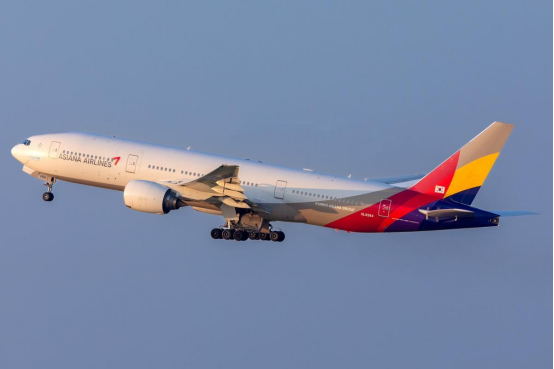
Facing the challenge of soaring fuel prices, Eastation International Logistics leverages the location advantages of the Incheon hub with the following strategies:
l Diversified capacity mix: Maintain strategic cooperation with core carriers like Korean Air and Asiana Airlines, ensuring priority space access on key routes including Incheon to AMS, LHR, LGG, and LAX. Incheon Airport has over 110 international cargo routes, directly serving more than 180 cities in over 80 countries, with a direct flight time to Los Angeles (LAX) of only 11-13 hours.
l Dynamic rate monitoring: Track fuel surcharge adjustments and rate changes in real time via professional rate analysis platforms, providing clients with optimal cost advice.
l "Rate-Lock" mechanism: Offer rate-lock services based on the IATA jet fuel price index to help clients hedge against short-term price volatility.
Under the dual pressures of Middle East tensions and U.S. tariff policy adjustments, we continue to upgrade our supply chain solutions:
l Tariff-optimized transshipment: Leverage the advantages of the Incheon hub to help clients reduce China-origin tariff costs through the "Korean assembly + direct EU/U.S. shipping" model.
l Flexible port/airport selection: Beyond our core hubs (AMS, LHR, LGG, LAX), we have added alternative gateways such as FRA (Frankfurt) and ORD (Chicago) to enhance supply chain resilience.
Against the backdrop of high fuel prices and heightened rate volatility, we recommend clients adopt the following strategies:
1. Plan shipping schedules reasonably to avoid "rush peaks": Prepare inventory in advance and spread out shipments to avoid concentrated shipping during peak rate periods.
2. Book space early to avoid peak-season surcharges: Use our priority space resources to confirm shipping plans 7-14 days in advance and lock in rates.
3. Combine transport modes to reduce single dependency: Use air freight for fast-moving, time-sensitive goods; consider a hybrid model of ocean freight for base stock and air freight for replenishment.
4. Monitor tariff policy developments and plan transshipment strategies early: The U.S. Section 301 tariff investigation on China may produce new tariff proposals around May — we advise clients to plan Korea transshipment solutions in advance.
5. Establish a multi-gateway contingency mechanism: Maintain at least 1-2 alternative airports besides core hubs to enable quick route switching in case of sudden disruptions.
Looking ahead to Q2 2026, oil price direction will remain geopolitically driven. In the extreme scenario of a blocked Strait of Hormuz, the global crude supply gap could exceed 14 million barrels per day, with theoretical oil prices possibly reaching $138 per barrel. Even if the Middle East situation eases somewhat, the jet fuel market will not recover immediately — there are significant lags in trade flows returning to normal, refineries adjusting output, and airlines rescheduling flight operations.
On the other hand, the fundamental demand for global air freight remains solid. The 11.2% year-on-year growth in February shows that emerging demand drivers such as cross-border e-commerce continue to support the industry. IATA expects global air freight volumes to exceed 71.6 million tons in 2026, with the Asia-Pacific region continuing to lead growth.
For logistics service providers, the competition now is not just about price but about the ability to secure capacity and design supply chain resilience. Eastation International Logistics will continue to rely on the strategic advantages of the Incheon hub, providing stable capacity assurance, optimized route combinations, and flexible pricing mechanisms to help clients maintain efficient supply chain operations in a high-cost environment.
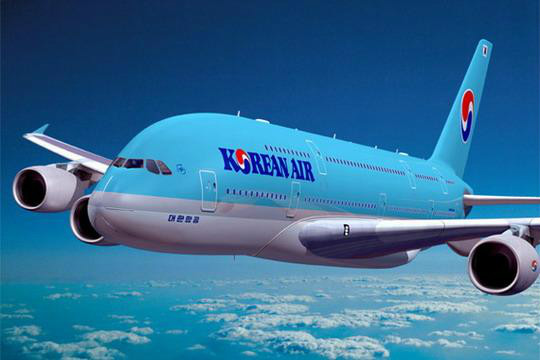
The sharp rise in jet fuel prices is reshaping the cost structure and competitive landscape of the global air freight market. In such a volatile environment, proactive planning, flexible responses, and active cost management are key to maintaining competitiveness for cross-border e-commerce and import/export companies.
Eastation International Logistics has years of expertise in the Korea-Europe/US air freight lane. Leveraging the strategic hub status of Incheon Airport, we provide tariff-optimized transshipment + priority customs clearance one-stop logistics solutions. Amid fuel volatility and supply chain uncertainty, we will work alongside you to overcome challenges and ensure your cargo reaches global destinations smoothly.
�� Contact us today for a customized logistics solution and the latest rate quotes!
Call 0755-29608051 or visit http://www.eastation.com.cn/ to learn more.