Why Is Korea-Origin Air Cargo Space Getting Harder to Book? Four Variables Shaping ICN–Europe and ICN–US Lanes in H2 2026
Yidong International Logistics (ESL)|Updated 1 September 2026|about 1,650 words, 6-minute read
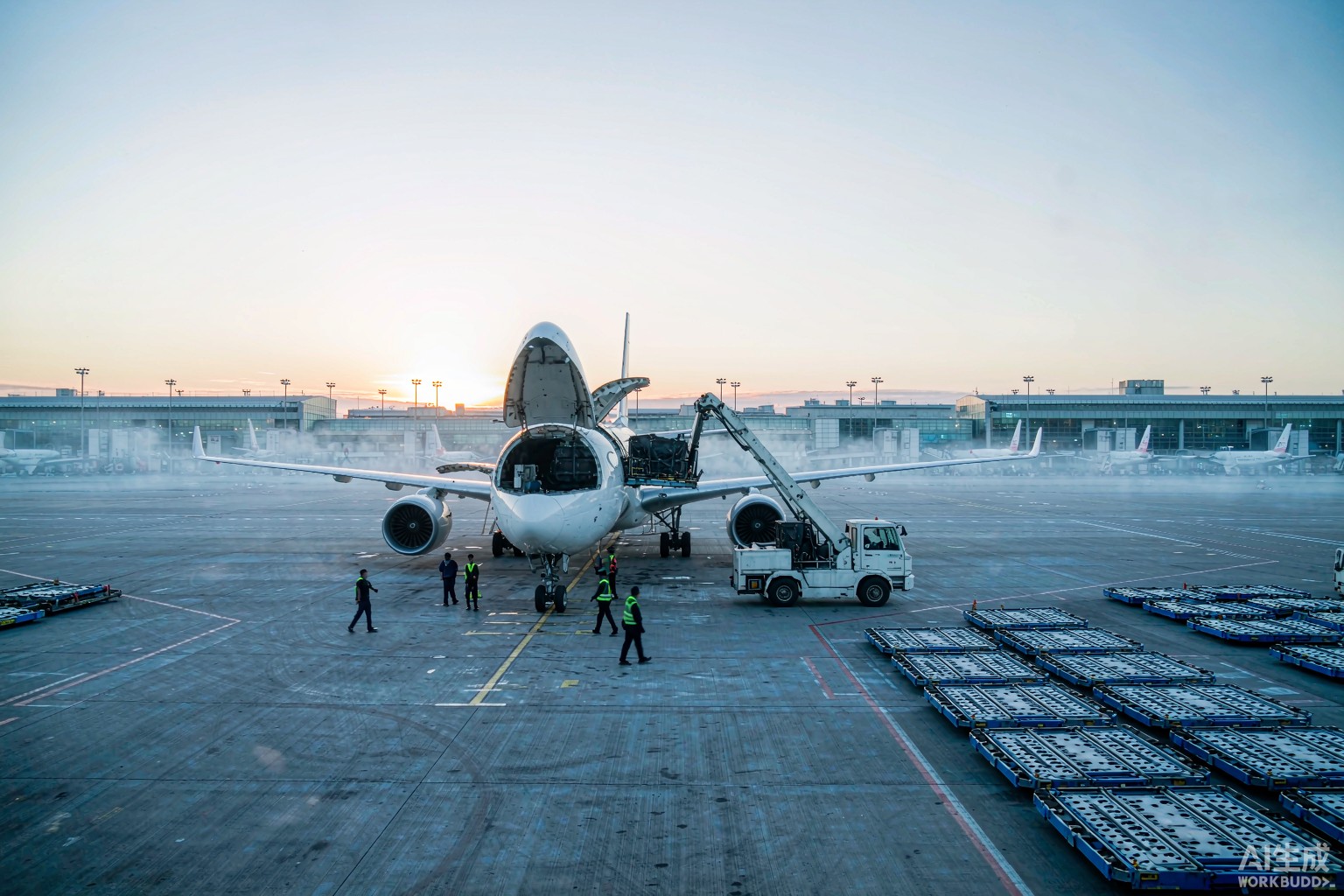
Since July, the first question customers ask us has changed. It used to be “what’s your rate per kilo?” Now it’s more often “do you still have pallet space this week?” On the same Incheon–Europe lane, rates haven’t moved much. Getting on the aircraft has become a separate problem.
This piece sets out the four things we’re watching: chips taking the pallets, the EU’s €3 duty, the end of the US $800 exemption, and the rates themselves. All of it has already happened or is happening now. None of it is a forecast.
1. Chips are taking the pallet space
This isn’t a hunch. Korean Air’s cargo yield — revenue per tonne-kilometre — jumped 41.8% year on year to ₩703 in the second quarter, while cargo traffic rose only 3.0% and load factor slipped from 72.3% to 71.3%. The airline moved barely more freight and earned dramatically more for it. (Herald Business, July 2026)
What pushed the yield up is AI hardware. Korea’s Ministry of Trade, Industry and Resources reported on 1 July that June exports reached US$102.25 billion, up 70.9% year on year — the first month above $100 billion, making Korea the fourth country ever to cross that line. Semiconductors alone hit $44.82 billion, up 199.5%, the first month above $40 billion. First-half semiconductor exports came to $192.4 billion, already more than the $173.4 billion Korea shipped in the whole of 2025. This cargo has a consistent profile: high value, sensitive to shock, tied to construction schedules, largely indifferent to freight cost and extremely sensitive to space.
That’s the problem. If you move general cargo or e-commerce, you are competing with chips for the same pallet.
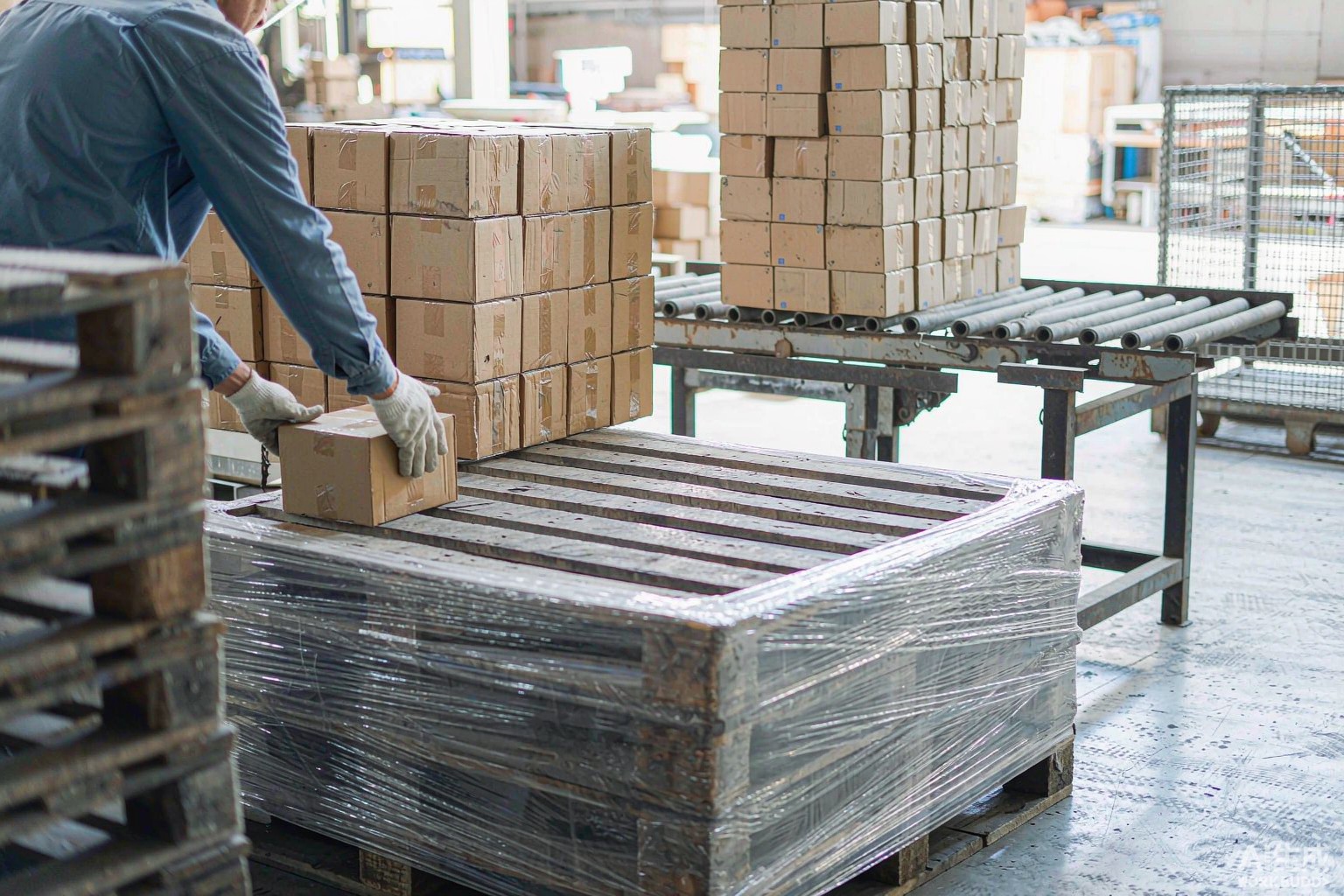
Building loose cargo into full pallets remains the most direct way to bring unit cost down
2. The EU’s €3 — don’t read it as “€3 per shipment”
From 1 July 2026, the EU removed the duty exemption for imported parcels valued under €150 and moved into a transitional regime: qualifying low-value parcels carry a flat €3 duty per HS subheading, running until 1 July 2028, after which normal tariff rates by product classification apply. (European Commission guidance, 8 June 2026; Regulation (EU) 2026/382)
The three words that get missed are “per HS subheading”. In the Commission’s own worked example, a parcel containing one silk shirt and two woollen shirts spans two subheadings and carries €6 of duty. If you ship bundles, gift sets or multi-SKU packs, count the distinct tariff codes in the parcel before you quote — don’t multiply the piece count by three.
One clarification worth making: what was removed here is the duty exemption, not VAT. The EU scrapped its VAT exemption for imported goods under €22 back on 1 July 2021. That is a separate change, and the two get conflated online more often than they should.
There is another charge still coming. On 26 March 2026 the Council and the European Parliament reached a political agreement on customs reform that adds an EU-wide handling fee for small parcels sold at a distance into the EU, with member states required to apply it no later than 1 November 2026. As of publication, the amount still depends on a Commission delegated act — treat any specific figure circulating online as unconfirmed. The same reform package requires a product identifier (PID) to be declared for e-commerce parcels; the implementing details likewise await further EU documentation.
The market has already reacted. At Liege Airport (LGG), total tonnage in July was still up 4% year on year, but e-commerce parcel counts in the Bierset customs zone fell 24% against July 2025 and 41% against June 2026, while parcels valued above €150 rose 10%. The airport attributes the tonnage to pharmaceuticals, data centre equipment and flowers. (Liege Airport, 16 August 2026)
Low-unit-price single-parcel direct mail is retreating; higher-value and consolidated shipments are taking its place. I don’t see that reversing in the near term.
Numbers worth remembering for H2 2026
|
Indicator |
Change |
|
Korea semiconductor exports, June |
+199.5% |
|
Korean Air Q2 cargo yield |
+41.8% |
|
Asia Pacific → US spot rate (YoY) |
+36% |
|
Asia Pacific → Europe spot rate (YoY) |
+29% |
|
Liege e-commerce parcels, July |
-24% |
Bars drawn to scale by percentage value (1.9px = 1%). For comparison only; not a shared unit of measure.
3. US lanes: the $800 exemption isn’t “suspended”, it’s gone
The timeline is tangled, so here it is straight from the official documents:
· 30 July 2025 — Executive Order 14324 suspended duty-free treatment for goods valued under $800 worldwide, effective 29 August 2025;
· 20 February 2026 — Executive Order 14388 continued that suspension;
· 24 June 2026 — US Customs and Border Protection published two interim final rules in the Federal Register: for goods under $800 arriving through non-postal channels, de minimis is suspended indefinitely and formal or simplified entry is required; a new simplified process for postal shipments took effect 24 July 2026, and from 22 October 2026 certain goods fall out of the simplified process and require formal entry.
(Sources: CBP interim final rules, US Federal Register; Hong Kong Trade and Industry Department Commercial Information Circular No. 544/2026, issued 25 June 2026 and updated 9 July 2026.)
For cargo moving from Korea to the US, the direct effect is that the cost structure of loose small parcels has changed — the duty and entry fees that used to be avoided now have to be priced in, which leaves consolidated B2B shipments comparatively better off.
On tariffs there is one point that works in favour of Korean-origin goods: in the Section 301 tariffs the USTR set for 60 trading partners in July, Korea faces 12.5%, but semiconductors and semiconductor manufacturing equipment, passenger vehicles and parts, and steel and aluminium are on the exemption list. Seoul also maintains that Section 301 tariffs should be counted within the 15% cap agreed under last year’s Korea–US arrangement. (Yonhap, 6 August 2026; Maeil Business)

US lanes now need 10-digit HTS codes, and the EU’s PID rules are still being finalised — get the data fields ready now
4. Rates: still about 30% above last year, but the trend has turned
Start with the most recent numbers. WorldACD’s full-month July data puts the Asia Pacific → Europe spot average at US$4.75/kg, up 29% year on year but down 10% from June; the global spot average was $3.41/kg, up 29% year on year and down 8% month on month. Still expensive relative to last year, but the climb has stopped.
Korea-origin lanes are moving around more than most. In the week covering mid-to-late July, the Asia Pacific → US spot rate held at $6.61/kg, up 36% year on year, with Korea-origin rates rising 5% week on week; by the week ending 9 August, Korea-origin spot rates to Europe were down 6% week on week. Same lane, two directions, three weeks apart. (WorldACD weekly data)
Here is a comparison that works in Korea’s favour. After the EU rules took effect, July volumes from Hong Kong to Europe fell 24% year on year and from mainland China 6%, with the two combined down 12% — and WorldACD attributes the broader Asia Pacific → Europe decline specifically to e-commerce contraction out of mainland China and Hong Kong. Korea-origin freight is not part of that cause. Put plainly: right now, flying from Incheon to Europe is somewhat easier to book than flying from Hong Kong.
Looking ahead, iM Securities, Shinhan Investment and KB Securities forecast Korean Air’s third-quarter cargo yield at ₩618, ₩646 and ₩683 respectively — between 3% and 12% below the ₩703 peak of Q2, but still 25% to 39% above last year’s ₩496. The three houses agree on the shape: Q3 comes off the peak and stays elevated.
Rates are not going back to last year’s levels. Panic-booking isn’t warranted either. The rest of this year looks more like high-level volatility than a one-way climb.
5. What we can do from Incheon
Korea-origin is what we do. Yidong International Logistics (ESL) moves cargo out of Incheon (ICN) primarily to Amsterdam (AMS), Liege (LGG), London (LHR) and Los Angeles (LAX), handling e-commerce goods, vapes, general cargo and small-parcel consolidation.
In practice, here is where that helps:
· Consolidation at the Korean gateway — building loose cargo into full pallets to bring unit cost down;
· Pre-classification by HS subheading before shipping — the €3 is charged per subheading, and doing this early removes a pile of reconciliation later;
· Mapping the difference between IOSS and non-IOSS clearance routes, and preparing the PID data fields;
· Locking space early. Given how tight Incheon outbound is right now, book two to three weeks ahead.
6. Shipping in September? Run these four numbers first
1. Duty and tax. The €3 is charged per HS subheading — classify mixed parcels before quoting. The EU handling fee amount is still unconfirmed, so leave a margin in the quote.
2. Space. September through November is peak season and Korea outbound is especially tight. Booking early works better than negotiating hard.
3. Documentation. US lanes require 10-digit HTS codes, and the EU’s PID and handling fee details land later this year. Both data fields should be ready now.
4. Channel. Re-run landed cost for low-unit-price single-parcel SKUs under the new duty. Where the maths doesn’t work, look at consolidated shipments or European local fulfilment.
Send us the commodity description, HS codes, piece count, weight and dimensions, and destination. We’ll run a landed cost against the current week’s space and the duty rates in force — better than working from a guess.
Sources
· Korean Air Q2 cargo figures and broker forecasts: Herald Business, July 2026; Chosun Biz, 21 July 2026
· Korea’s June and first-half exports, semiconductor exports: Ministry of Trade, Industry and Resources (MOTIR), released 1 July 2026
· EU removal of the €150 duty exemption and the €3 transitional flat duty: European Commission guidance, 8 June 2026; Regulation (EU) 2026/382
· EU customs reform agreement and handling fee: Council of the EU press release, 26 March 2026
· US de minimis: CBP interim final rules, US Federal Register (24 June 2026); Hong Kong Trade and Industry Department Commercial Information Circular No. 544/2026
· Liege Airport July 2026 volumes: Liege Airport official release, 16 August 2026
· Rates and volumes: WorldACD Weekly Air Cargo Trends — week 29, full-month July review, and the week ending 9 August 2026
Data in this article is current as of 31 August 2026. Policy and rates change frequently — confirm the current week’s position with us before shipping.